Hölzel was founded on 11 September 1767 by colonists who had been recruited by LeRoi & Pictet. The colony received its name from Anton Hölzel, its first mayor (Vorsteher).
The village was relocated to higher ground, east of its former location, due to the flooding caused by the Volga Reservoir in 1961. The Volgograd (formerly Stalingrad) Hydroelectric Power Station many kilometers down river created this large reservoir which inundated several of the Volga German colonies. Consequently, there is a Russian village today that is called Kochetnoye, but it is not in the same location as the former colony of Hölzel. Many of the Volga German buildings were moved to the new location.
The original colonists who settled in Hölzel were Roman Catholic.
From its beginning to 1869, the congregation in Hölzel was served by the priests from the parish in Preuss. In 1869, an independent parish was formed in Hölzel and the congregation there received its own resident priest.
A large residential building served as a worship facility for the congregation in Hölzel until 1824 when a wooden church was constructed and consecrated by Father Schrednitsky. Construction of a new church began in 1847. It was consecrated in 1849 in the name of John the Baptist. There was also a chapel built in the cemetery in Hölzel.
A decree of the Presidium of the Central Executive Committee of the ASSR of the Volga Germans in 1932 closed the church in Hölzel.
colony. The former Catholic church in Hölzel was relocated to the new village location in 1961, but nothing remains of it today.
The Catholic congregation in Hölzel was served by the following priests:
Joseph Graf (1897-1903)
Alois Vondrau (1909-1910)
Nikodemus Ihly (1911-1914)
Raphael Dietrich (1929-1932)
Immigrated to the following locations
|
Year
|
Households
|
Population
|
||
|---|---|---|---|---|
|
Total
|
Male
|
Female
|
||
|
1767 |
59
|
198
|
106
|
92
|
|
1769 |
52
|
194
|
107
|
87
|
|
1773 |
47
|
196
|
105
|
91
|
|
1788 |
|
170
|
|
|
|
1798 |
|
233
|
|
|
|
1816 |
|
400
|
|
|
|
1834 |
|
702
|
|
|
|
1850 |
|
1,169
|
|
|
|
1857 |
|
|
|
|
|
1859 |
|
1,359
|
|
|
|
1889 |
|
1,866
|
|
|
|
1897 |
|
1,904*
|
962
|
942
|
|
1905 |
|
2,516
|
|
|
|
1910 |
|
2,907
|
|
|
|
1912 |
|
2,906
|
|
|
|
1920 |
460
|
2,808
|
|
|
|
1922 |
|
2,148
|
|
|
|
1923 |
|
1,843
|
|
|
|
1926 |
371
|
1,831
|
868
|
963
|
|
1931 |
|
1,798
|
|
|
*Of whom 1,893 were German.
- Beratz, Gottieb. The German colonies on the Lower Volga, their origin and early development: a memorial for the 150th anniversary of the arrival of the first German settlers on the Volga, 29 June 1764. Translated by Adam Giesinger (Lincoln, NE: American Historical Society of Germans from Russia, 1991): 350.
- Diesendorf, V.F. Die Deutschen Russlands : Siedlungen und Siedlungsgebiete : Lexicon. Moscow, 2006.
- Koch, Fred C. The Volga Germans: In Russia and the Americas, from 1763 to the Present (University Park: Pennsylvania State University Press, 1977): 308.
- Pallas, P.S. Reise durch verschiedene Provinzen des Russischen Reichs. Theil 3,2, Reise aus Sibirien zurueck an die Wolga im 1773sten Jahr (St. Petersburg: Kaiserl. Academie der Wissenschaften, 1776): 609.
- Pleve, Igor. Einwanderung in das Wolgagebiet, 1764-1767 Band 2 (Göttingen: Der Göttinger Arbeitskreis, 2001): 109-123.
- Preliminary Results of the Soviet Census of 1926 on the Volga German Autonomous Soviet Socialist Republic (Pokrovsk, 1927): 28-83.
- "Settlements in the 1897 Census." Journal of the American Historical Society of Germans from Russia (Winter, 1990): 16.
- 1767 Hölzel Census
- 1798 Hölzel Census
- 1834 Hölzel Census
- 1850 Hölzel Census
- 1857 Hölzel Census
- Hölzel Parish Registers (Baptisms, Marriages, Burials) [Online - Darryl Boyd]
50.844946, 46.109267
Migrated From
Immigration Locations
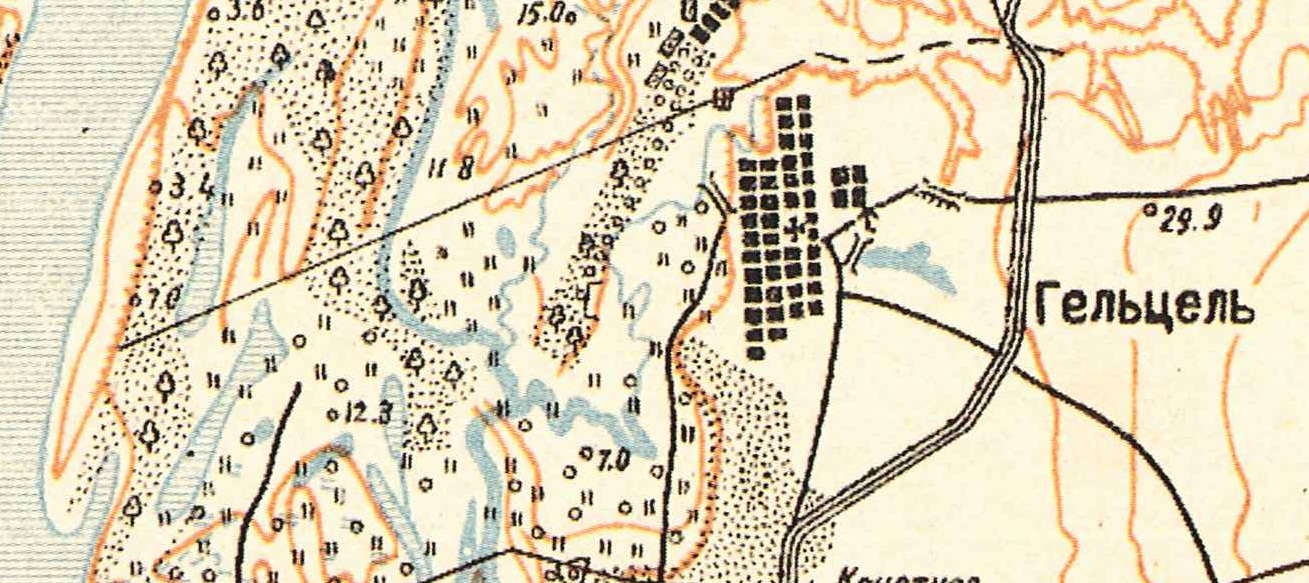
Map showing Hölzel (1935).
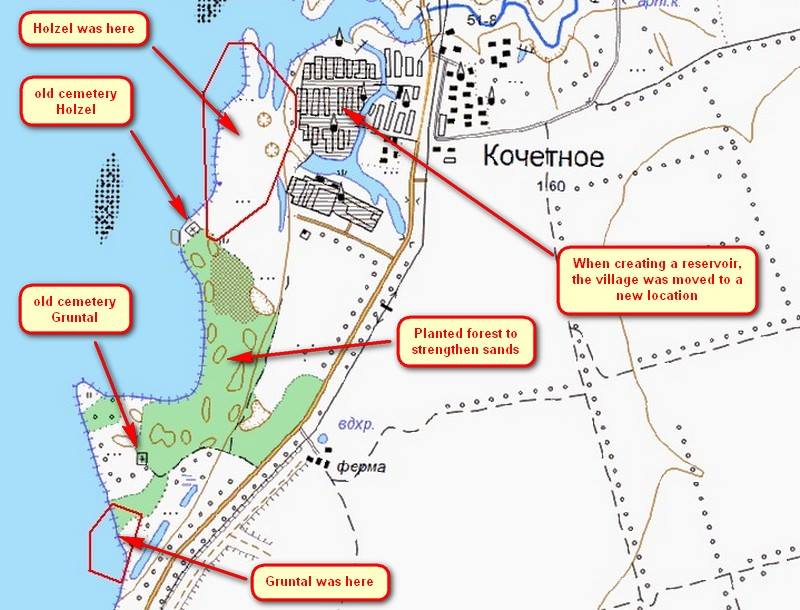
Map showing the location of Hölzel (top center) before and after the flooding by the creation of the Volga Reservoir in 1961.
Source: Vladimir Kakorin.
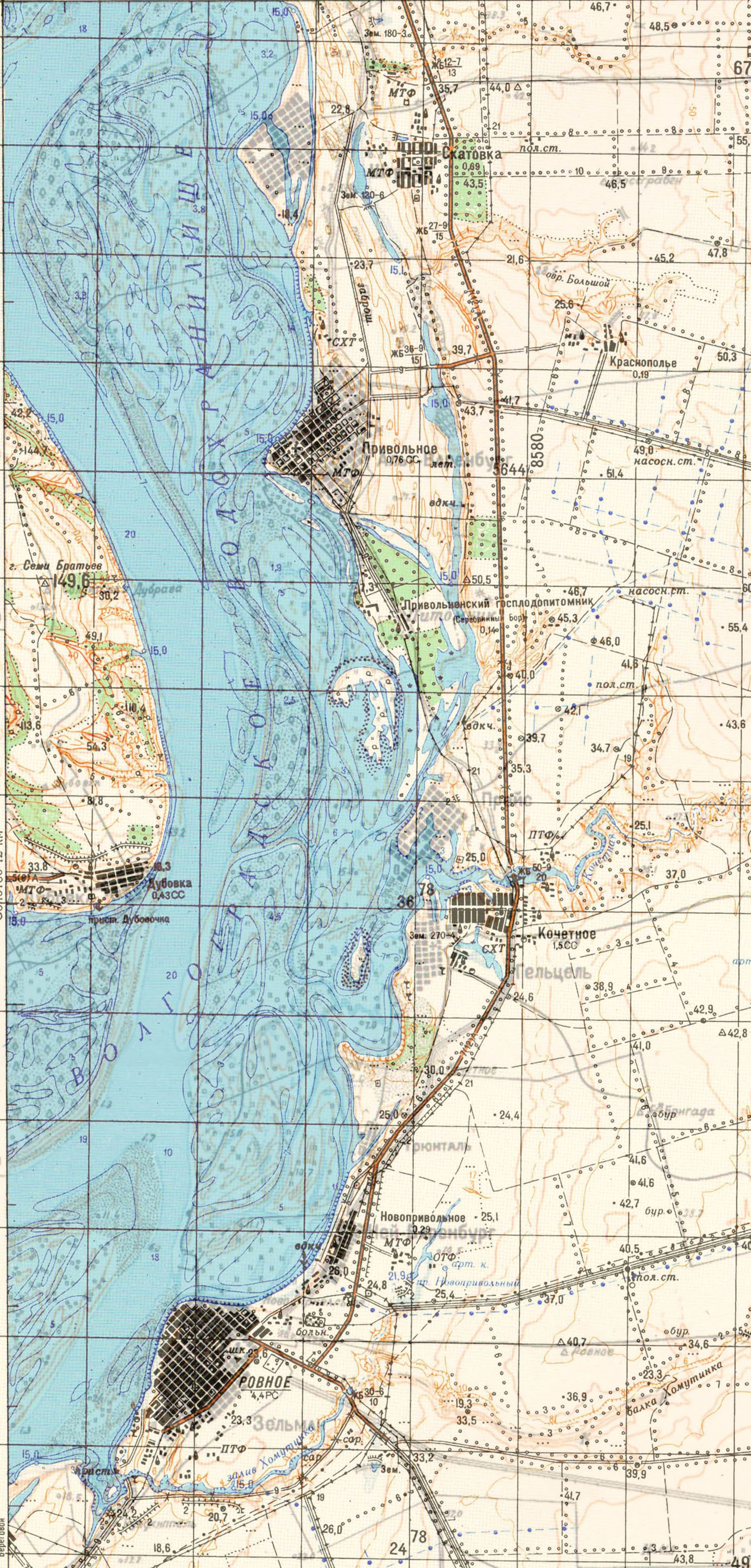
This map overlays several maps that show the location of Hölzel (just below center) before and after the inundation of the Volga Reservoir in 1961.
Source: Vladimir Kakorin.
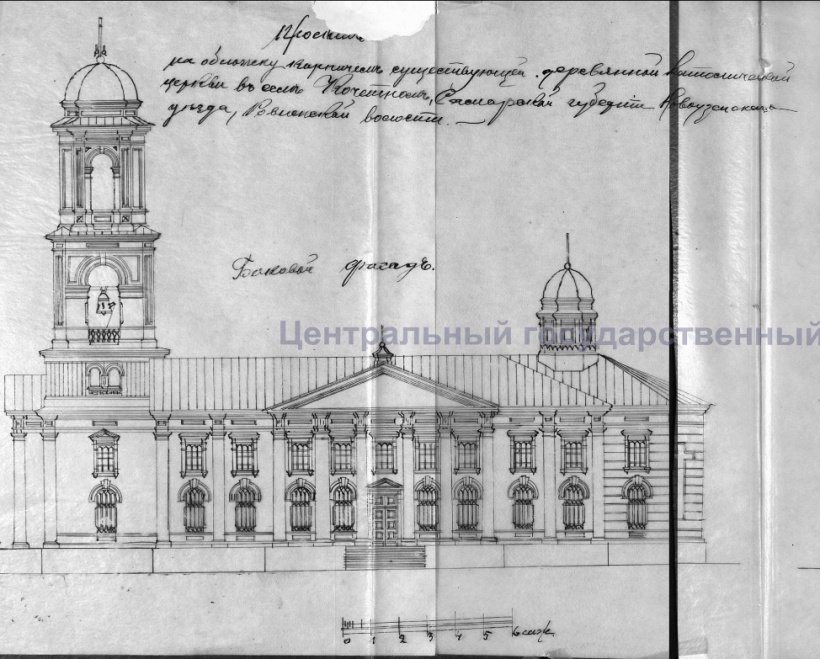
Architectural rendering of the church in Hölzel.
Source: Jorge Bohn.