The Lutheran colony of Schilling was founded by 96 families from the Pfalz and Alsace on 14 August 1764. They had been recruited by agents of the Tsarist Government. The colony was named after Johannes Schilling, an early leader of the colony.
According to Christian August Tornow, Schilling was also known as Schmunk during the first few years of its existance.
By decree on 26 February 1768, the colony received the Russian name of Sosnovka.
The 1767 census of Schilling has not been located. Based upon the 1775 census of Schilling, Idt & Rauschenbach have created a list of those early colonists based upon other documents.
Notes accompanying the 1775 census of Schilling record that the colonists were dissatisfied with the quality of the land that had been allocated to them. The colonists are also identified as being diligent workers, both in the fields and in the vegetable gardens. They also cultivate fruitful orchards.
In 1859, 128 colonists moved to the daughter colony of Neu-Schilling along the banks of the Yeruslan River. They were joined in 1881 by another 48 colonists.
Schilling was a port colony, with large commercial cargo and passenger docks capable of handling 700 thousand tons of cargo per year. The port in Schilling received shipment of relief supplies during the 1921 Famine to the colonies on the Bergseite.
From 19-22 September 1917, the Second Congress of the Volga Germans was held in Schilling. Soviet Communist Party leader H.A. Luft (1899-1937) was born in Schilling. Physician and anthropologist P.K. Haller (1858-1920) and author/historian Peter Sinner (1879-?) were also born in Schilling.
Immigration from Schilling to American began in 1874 and continued through 1878. Immigration resumed from 1881 to 1886.
Today, what remains of the former colony of Schilling is known as Sosnovka (not to be confused with the former colony of Susannental on the Wiesenseite that is also known today as Sosnovka).
Notes accompanying the 1775 census of Schilling record that materials from a dilapidated empty house were used in the construction of a prayer house.
Schilling was part of the Beideck parish during the early years. A wooden church was constructed in 1883. In approximately 1999, the remains of this structure were dismantled and the wood used for other buildings in the village.
The congregation in Schilling was served by the following pastors:
- 1767-1770 Georg Christian Seyer
- 1771-1778 Laurentius Ahlbaum
- 1793-1820 Johann Martin Otto
- 1821-1828 Lukas Cattaneo
- 1828-1828 Heinrich Köpke
- 1830-1836 Alexander Haken
- 1836-1850 Christian Gottlieb Hegele
- 1852-1858 Karl Dönhoff
- 1859-1880 Felician Joseph Dittrich
- 1883-1901 Hugo Amadeus Julius Günther
- 1918-1929 Herbert Julius Günther
Immigrated to the following locations
|
Year
|
Households
|
Population
|
||
|---|---|---|---|---|
|
Total
|
Male
|
Female
|
||
|
1769 |
96
|
404
|
199
|
205
|
|
1773 |
95
|
429
|
215
|
214
|
|
1788 |
91
|
532
|
271
|
261
|
|
1798 |
94
|
626
|
312
|
314
|
|
1816 |
118
|
851
|
436
|
415
|
|
1834 |
180
|
1,295
|
676
|
619
|
|
1850 |
174
|
1,839
|
965
|
874
|
|
1857 |
200
|
1,966
|
1,034
|
932
|
|
1859 |
170
|
1,992
|
1,046
|
946
|
|
1886 |
283
|
2,098
|
1,080
|
1,018
|
|
1891 |
270
|
2,686
|
1,325
|
1,361
|
|
1894 |
303
|
2,588
|
1,288
|
1,300
|
|
1897 |
|
3,245*
|
1,278
|
1,967
|
|
1904 |
|
3,068
|
|
|
|
1910 |
|
3,388
|
|
|
|
1912 |
|
3,564
|
|
|
|
1920 |
530**
|
3,076
|
|
|
|
1922 |
|
2,801
|
|
|
|
1923 |
|
2,674
|
|
|
|
1926 |
598***
|
3,210
|
1,563
|
1,647
|
|
1931 |
|
3,411****
|
|
|
*Of whom 3,175 were German.
**Of which 513 households were German.
***Of whom 3,088 were German (542 households: 1,490 male & 1,598 female).
****Of whom 3,380 were German.
- Schilling (Wolgadeutsche.net)
- Village of Schilling (Gary Martens)
- Beratz, Gottieb. The German colonies on the Lower Volga, their origin and early development: a memorial for the 150th anniversary of the arrival of the first German settlers on the Volga, 29 June 1764. Translated by Adam Giesinger (Lincoln, NE: American Historical Society of Germans from Russia, 1991): 352.
- Diesendorf, V.F. Die Deutschen Russlands : Siedlungen und Siedlungsgebiete : Lexicon. Moscow, 2006.
- Erbes, Johannes. Deutsche Volkszeitung (23 August 1906).
- Idt, Andreas and Georg Rauschenbach. Einige Kapitel aus der Geschichte des Kolonisationsprojekts von Katharina II: 1763-1775 (Moscow: Idt & Rauschenbach, 2021): 520-543.
- List of Settlements in the Russian Empire in 1859, vol. 38: Saratov Province (St. Petersburg, 1862): 58.
- Mink, A.N. Historical and Geographical Dictionary of the Saratov Province [in Russian] (Saratov, Russia, 1898): 962-967.
- Orlov, Gregorii. Report of Conditions of Settlements on the Volga to Catherine II, 14 February 1769.
- Pallas, P.S. Reise durch verschiedene Provinzen des Russischen Reichs. Theil 3,2, Reise aus Sibirien zurueck an die Wolga im 1773sten Jahr (St. Petersburg: Kaiserl. Academie der Wissenschaften, 1776): 621.
- Pleve, Igor R. The German Colonies on the Volga: The Second Half of the Eighteenth Century, translated by Richard Rye (Lincoln, NE: American Historical Society of Germans from Russia, 2001): 318.
- Preliminary Results of the Soviet Census of 1926 on the Volga German Autonomous Soviet Socialist Republic (Pokrovsk, 1927): 28-83.
- Schnurr,Joseph, Die Kirchen und das Religiöse Leben der Russlanddeutschen, Evangelischer Teil (Stuttgart: AER Verlag Landsmannschaft der Deutschen aus Rußland, 1978): 191.
- "Settlements in the 1897 Census." Journal of the American Historical Society of Germans from Russia (Winter, 1990): 19.
- 1775 Schilling Census.
- 1798 Schilling Census.
- 1834 Schilling Census.
- 1857 Schilling Census.
- 1881-1906 Schilling Family List.
- 1913-1930 Schilling Family List.
51.187667, 45.7845
Migrated From
Immigration Locations
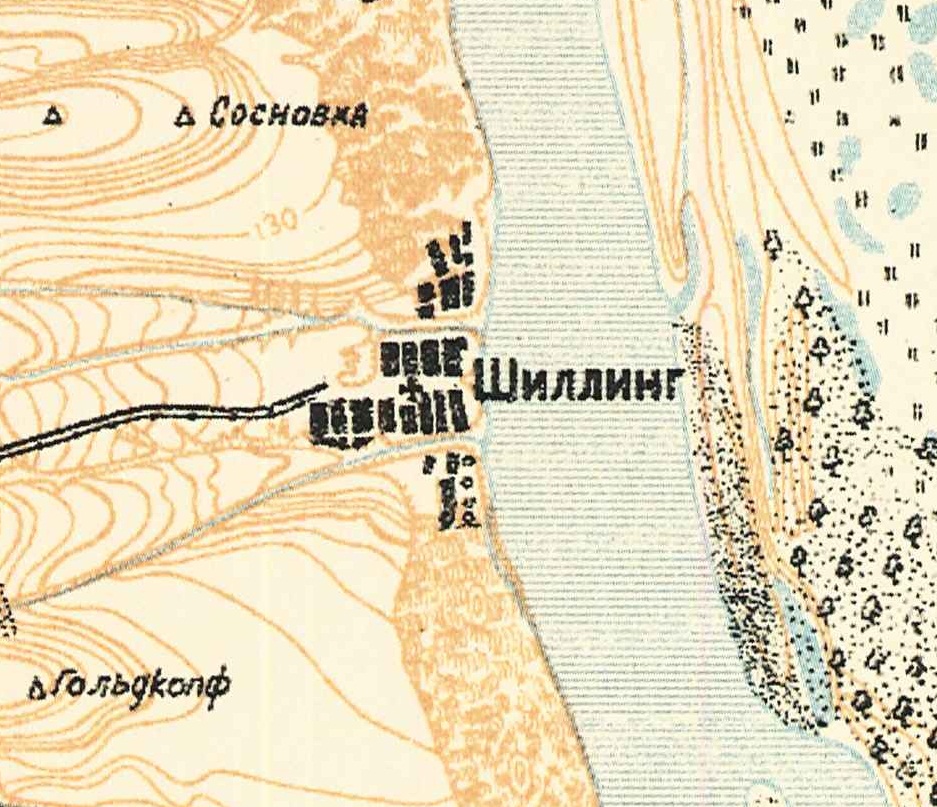
Map showing Schilling (1935).
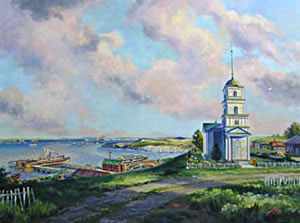
Painting of Schilling, Russia by artist Michael Boss.
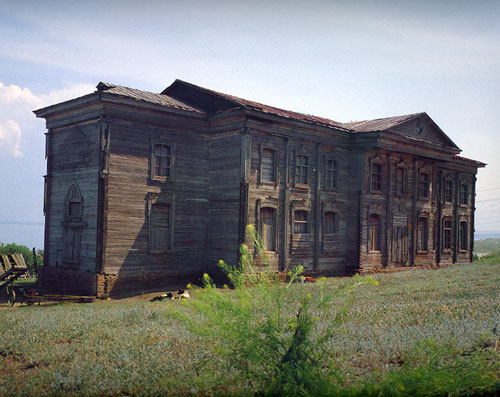
Ruins of the Schilling Lutheran Church.
The building has been subsequently torn down.
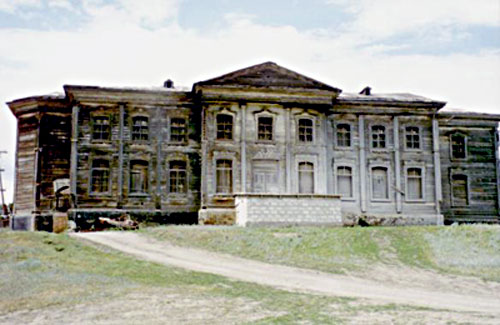
Schilling Lutheran Church.
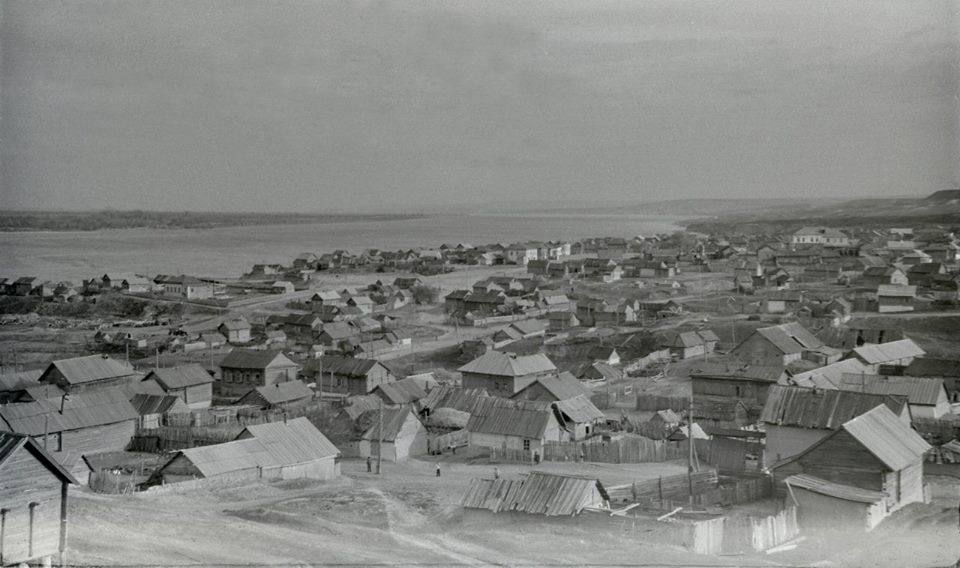
Schilling (unknown date).
Source: Jorge Bohn.