Straub was founded on 12 May 1767 by 59 colonist families recruited by LeRoi & Pictet from Weilburg, Braunfels, Isenburg, and Hanau. It was located on the left bank of the Volga River about 55 kilometers south of Pokrovsk (Engels). It was named in honor of its first leader, Johann Heinrich Straub.
Straub was plundered in 1774 by Pugachev and his followers.
The Volga German colonists were deported from Straub in 1941. The colony was relocated to higher ground in on the bluff above the Volga River in anticipation of the inundation of the Volga Reservoir that was created by the construction of the Volgograd Hydroelectric Power Station which was completed in 1961. The former location is now mostly on an island in the Volga River.
Many of the buildings constructed by the Volga Germans were moved to the village's new location.
What remains of the former Volga German colony of Straub, now in its new location, is known as Skatovka.
The congregation in Straub was part of the Warenburg Lutheran Parish which had been established in 1770.
During the first decades, worship services were held in the Bethaus [prayer house] (which also served as the school). The first church building was constructed in 1824.
In 1875, a new church was commissioned with F. Lagus as the architect. It was constructed in the Kontor style and could accommodate 900 worshipers. It was dedicated in 1876. A wooden bell tower was also constructed next to the church.
The church was still in use as of 15 September 1834, but by 1938 all worship services had ceased.
The congregation in Straub was served by the following pastors:
- 1785-1788 Friedrich Konrad Strengel
- 1797-1825 Bernhard Wilhelm Litfass
Immigrated to the following locations
|
Year
|
Households
|
Population
|
||
|---|---|---|---|---|
|
Total
|
Male
|
Female
|
||
|
1767 |
58
|
191
|
|
|
|
1769 |
54
|
195
|
104
|
91
|
|
1773 |
51
|
209
|
111
|
98
|
|
1788 |
|
224
|
|
|
|
1798 |
|
306
|
|
|
|
1816 |
|
314
|
|
|
|
1834 |
|
594
|
|
|
|
1850 |
|
952
|
|
|
|
1857 |
|
|
|
|
|
1859 |
|
1,176
|
|
|
|
1889 |
|
2,180
|
|
|
|
1897 |
|
2,050*
|
1,011
|
1,039
|
|
1904 |
|
2,467
|
|
|
|
1910 |
|
3,847
|
|
|
|
1912 |
|
3,735
|
|
|
|
1920 |
457**
|
2,770
|
|
|
|
1922 |
|
1,790
|
|
|
|
1926*** |
349
|
1,850
|
753
|
997
|
|
1931 |
|
1,988
|
|
|
*Of whom 2,037 were German.
**Of which 454 households were German.
***Of whom 1,844 were German (347 households: 850 male & 994 female).
- Straub (wolgadeutsche.net) [in Russian]
- Beratz, Gottieb. The German colonies on the Lower Volga, their origin and early development: a memorial for the 150th anniversary of the arrival of the first German settlers on the Volga, 29 June 1764. Translated by Adam Giesinger (Lincoln, NE: American Historical Society of Germans from Russia, 1991): 353.
- Diesendorf, V.F. Die Deutschen Russlands : Siedlungen und Siedlungsgebiete : Lexicon. Moscow, 2006.
- Orlov, Gregorii. Report of Conditions of Settlements on the Volga to Catherine II, 14 February 1769.
- Pallas, P.S. Reise durch verschiedene Provinzen des Russischen Reichs. Theil 3,2, Reise aus Sibirien zurueck an die Wolga im 1773sten Jahr (St. Petersburg: Kaiserl. Academie der Wissenschaften, 1776): 609.
- Pleve, Igor R. The German Colonies on the Volga: The Second Half of the Eighteenth Century, translated by Richard Rye (Lincoln, NE: American Historical Society of Germans from Russia, 2001): 319.
- Preliminary Results of the Soviet Census of 1926 on the Volga German Autonomous Soviet Socialist Republic (Pokrovsk, 1927): 28-83.
- "Settlements in the 1897 Census." Journal of the American Historical Society of Germans from Russia (Winter, 1990): 17.
50.973268, 46.066759
Migrated From
Immigration Locations
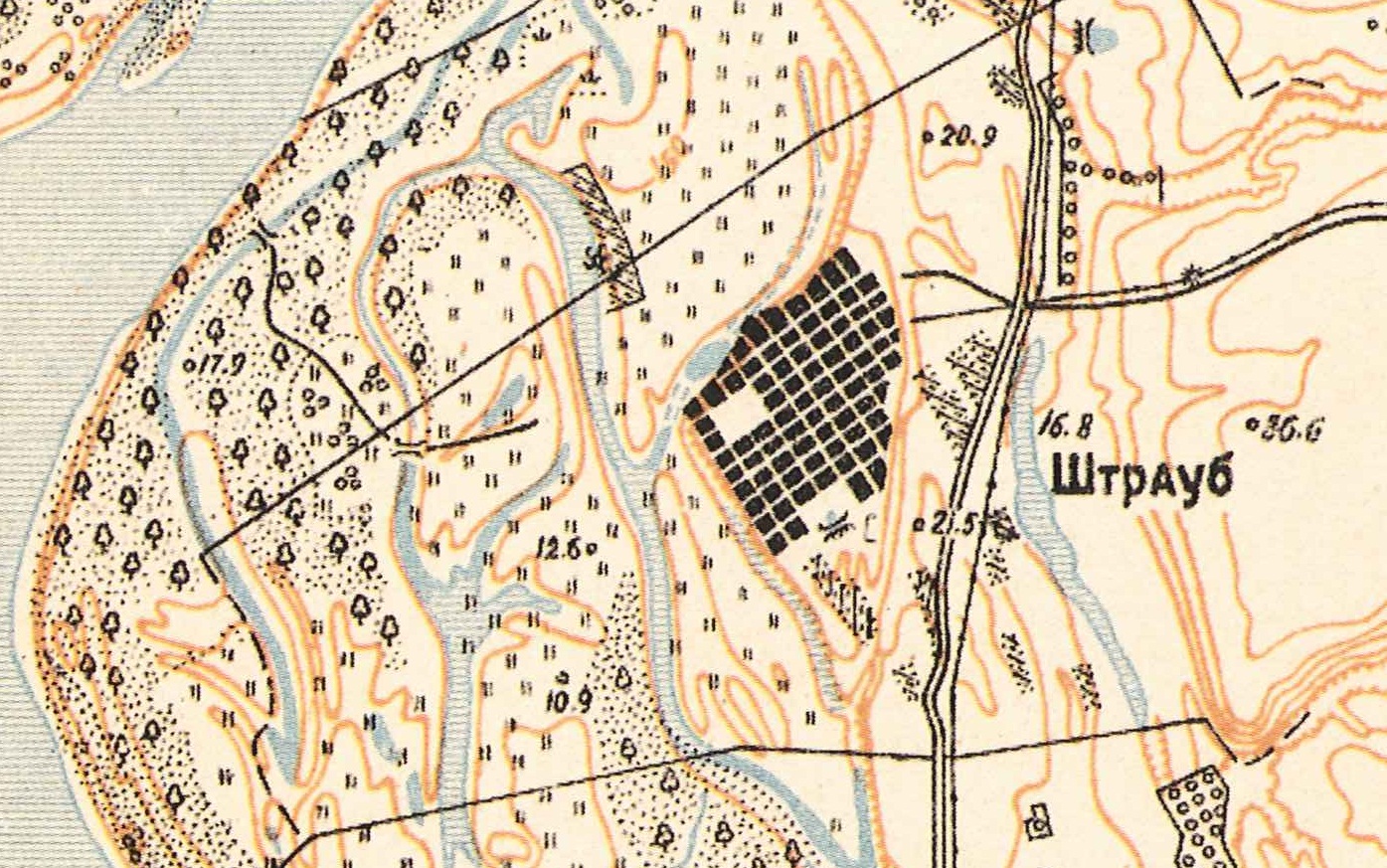
Map showing Straub (1935).
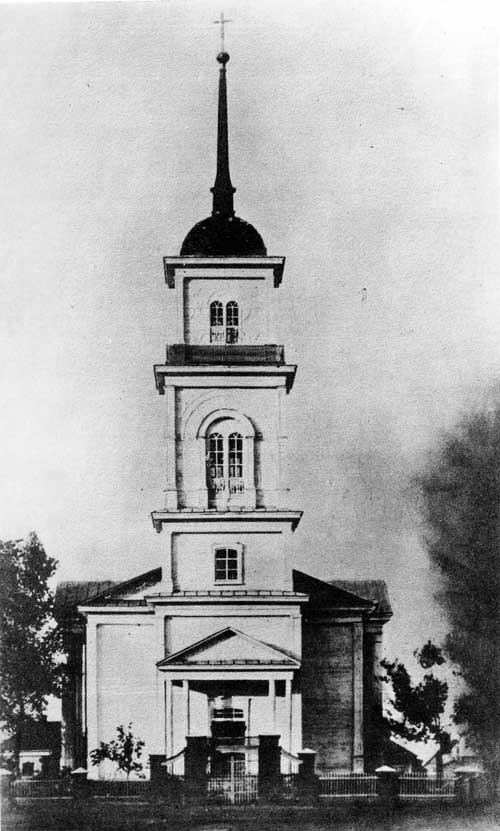
Straub Lutheran church built in 1875.
Source: Heimatbuch der Deutschen aus Rußland, 1972.

Former German houses in Straub (August 2003).
Source: Sharon White.
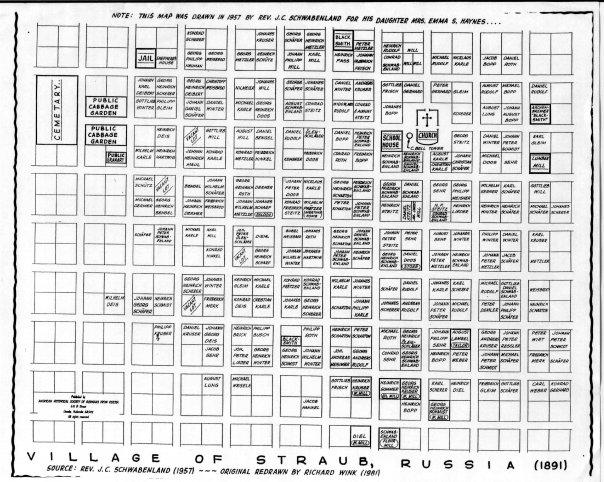
Map of Straub as of 1891.
Drawn by the Rev. J.C. Schwabenland.
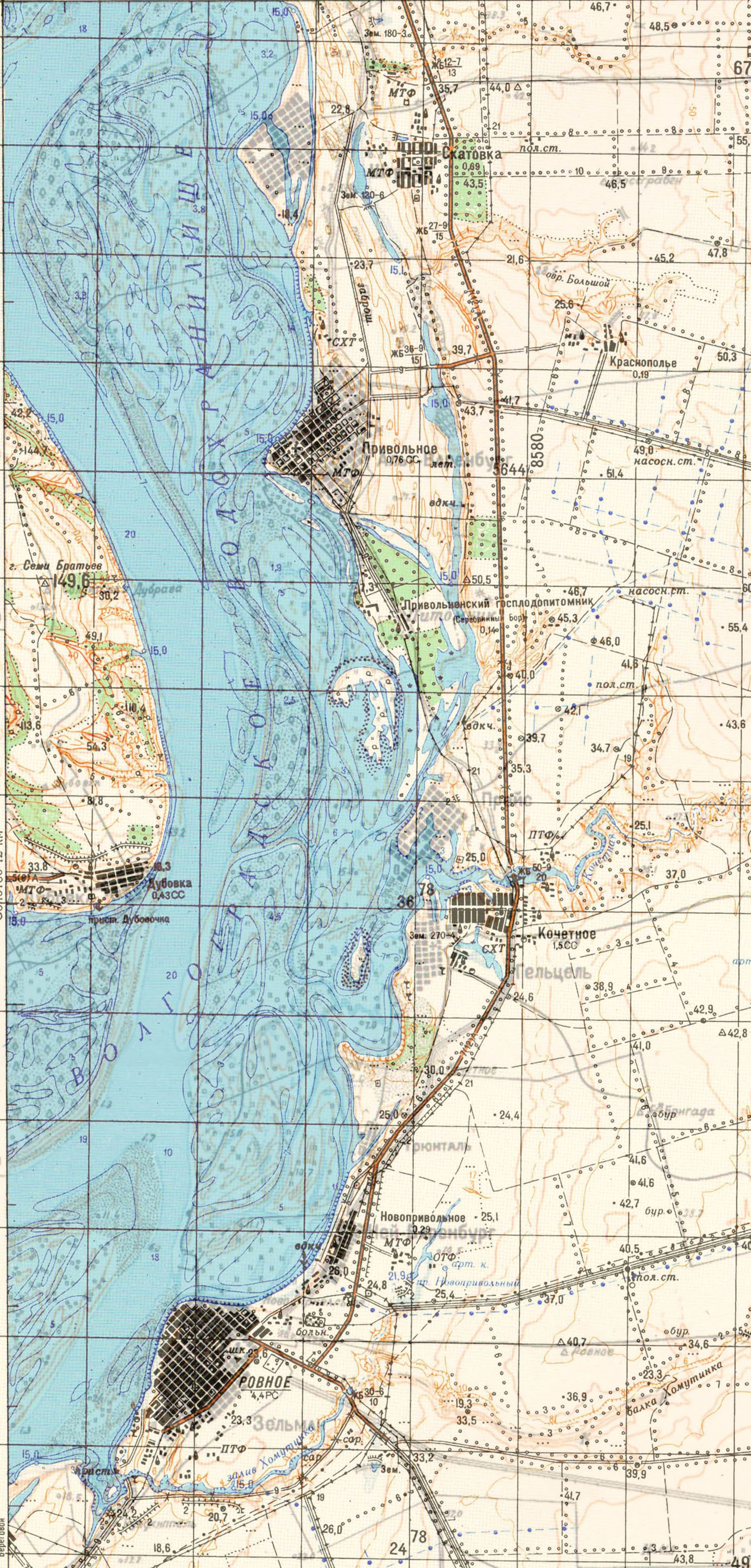
This map overlays several maps that show the location of Straub (top) before and after the inundation of the Volga Reservoir in 1961.
Source: Vladimir Kakorin.