Seelmann was founded on 15 July 1767 by colonists from the areas of Mainz, Alsace, and Isenburg in Germany and from Luxembourg. These colonists had been recruited by LeRoi & Pictet. On 12 November 1775, Seelmann was attacked by Pugachev and his rebels.
Seelmann is located right on the banks of the Volga River and was a major grain trading port for the Wiesenseite colonies.
Today, what remains of the former colony of Seelmann is known as Rovnoye.
The original colonists of Seelmann were primarily of the Roman Catholic faith practice. The congregation there was originally served by the parish headquarted in Preuss. An independent Catholic parish was formed in Seelmann in 1821 with a resident priest of its own. The first wooden parsonage was built in 1821-1822.
The first Catholic church building was constructed in a half-timber style shortly after the founding of the colony. The second church building was built at the end of the 18th century. In 1818, a third church building was constructed. It was wooden with a stone foundation. The church was consecrated in the name of Saints Peter and Paul.
In 1847-1848, on the site of the old church, a new wooden building was constructed on a stone foundation. It was built according to the plans of the Russian architect G.P. Gubanov. Construction and furnishings cost the colonists 18,000 rubles. The old church building was then sold to the Russian village of Prokhorovka, where it served the Orthodox parish for several decades.
By 1900, the parish had once again outgrown the structure and plans began for a new facility to be built out of brick in the neo-Gothic style. Construction began in 1902 and was completed in 1906 at a cost of 80,000 rubles. It was consecrated on 22 October 1906 again in the names of Saints Peter and Paul. Master P. Stuflesser from South Tyrol designed the interior. A new organ that had been manufactured in Bonn [Germany] was installed in 1910. In 1911, the new Neo-Gothic altar was installed at a cost of 6,000 rubles. It measured 2 meters high and 6 meters wide.
In 1907, a brick chapel was built in the parish cemetery with funding from the estate of local merchant Friedrich Kwiatkowski. It was dedicated to Our Lady of Perpetual Help. Mr. Kwiatkowski's remains were buried in the chapel. This chapel still exists in the old cemetery of Seelmann.
By early in the twentieth century, there was a large Catholic church in Seelmann along with a Lutheran prayer house (which had been built in 1883) and a Russian Orthodox Church dedicated to the Nativity of the Virgin.
By an order of the Central Executive Committee of the ASSR of the Volga Germans, the church was officially closed on 14 May 1934. It was converted into a community center. This church building was torn down in 1939.
The Catholic parish in Seelmann was served by the following priests:
- Johann Thomas Lopazinsky (1826?-1828)
- Joseph Jakubovsky (1828-1836)
- Aloysius Kappes
- Eduard Dittler (1914-?)
- Johannes Beilmann (1918-1923)
- Johannes Zimmermann (1918-1923)
Immigrated to the following locations
|
Year
|
Households
|
Population
|
||
|---|---|---|---|---|
|
Total
|
Male
|
Female
|
||
|
1767 |
89
|
257
|
128
|
129
|
|
1769 |
74
|
229
|
127
|
122
|
|
1773 |
71
|
280
|
145
|
135
|
|
1788 |
|
208
|
|
|
|
1798 |
|
310
|
|
|
|
1816 |
|
540
|
|
|
|
1834 |
|
1,018
|
|
|
|
1850 |
|
1,650
|
|
|
|
1857 |
|
|
|
|
|
1859 |
|
2,080
|
|
|
|
1889 |
|
4,945
|
|
|
|
1891 |
|
|
|
|
|
1894 |
|
|
|
|
|
1897 |
|
6,816*
|
3,480
|
3,336
|
|
1905 |
|
6,930
|
|
|
|
1910 |
|
7,508
|
|
|
|
1912 |
|
8,089
|
|
|
|
1920 |
|
8,412
|
|
|
|
1922 |
|
6,279
|
|
|
|
1923 |
|
6,106**
|
|
|
|
1926 |
|
6,218***
|
|
|
|
1939 |
|
7,363
|
|
|
*Of whom 5,014 were German.
**Of whom 5,344 were German.
***Of whom 5,240 were German.
Laikam, Raimund. "Das Grosse, Schöne Dorf Seelmann-Rownoje an der Wolga." Volk auf dem Weg (April 2007): 25. (English translation)
- Beratz, Gottieb. The German colonies on the Lower Volga, their origin and early development: a memorial for the 150th anniversary of the arrival of the first German settlers on the Volga, 29 June 1764. Translated by Adam Giesinger (Lincoln, NE: American Historical Society of Germans from Russia, 1991): 353.
- Dietz, Jacob E. History of the Volga German Colonists (Lincoln, NE: American Historical Society of Germans from Russia, 2005): 94.
- Pallas, P.S. Reise durch verschiedene Provinzen des Russischen Reichs. Theil 3,2, Reise aus Sibirien zurueck an die Wolga im 1773sten Jahr (St. Petersburg: Kaiserl. Academie der Wissenschaften, 1776): 609.
- Pleve, Igor. Einwanderung in das Wolgagebiet, 1764-1767 Band 4 (Göttingen: Der Göttinger Arbeitskreis, 2008): 11, 149-165."Settlements in the 1897 Census." Journal of the American Historical Society of Germans from Russia (Winter, 1990): 17.
- 1767 Seelmann Census
- 1798 Seelmann Census
- 1834 Seelmann Census
- 1850 Seelmann Census
- 1857 Seelmann Census
- Seelmann Parish Registers (Baptisms, Marriages, Burials) [Online - Darryl Boyd]
50.775, 46.053833
Migrated From
Immigration Locations
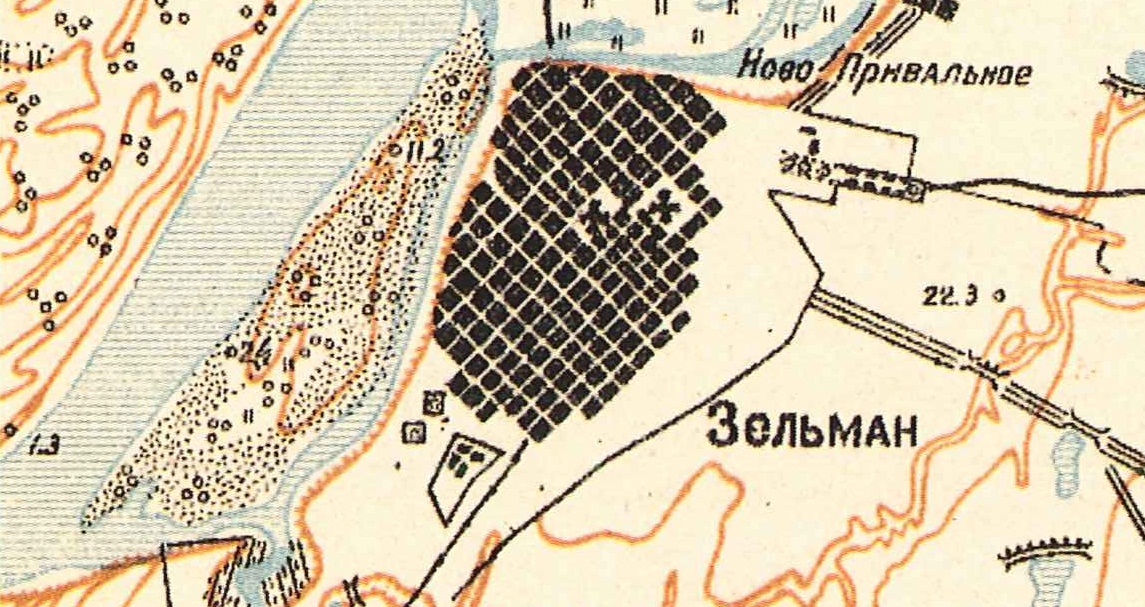
Map showing Seelmann (1935).
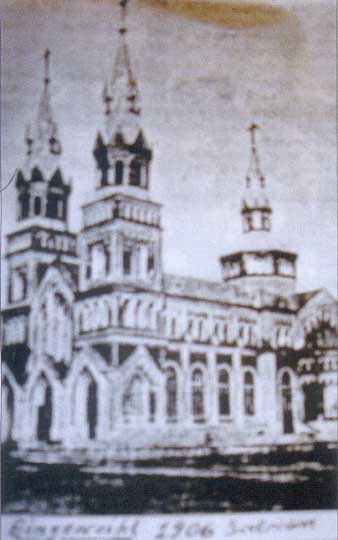
Seelmann Catholic Church
Source: Volk auf dem Weg, 2007.
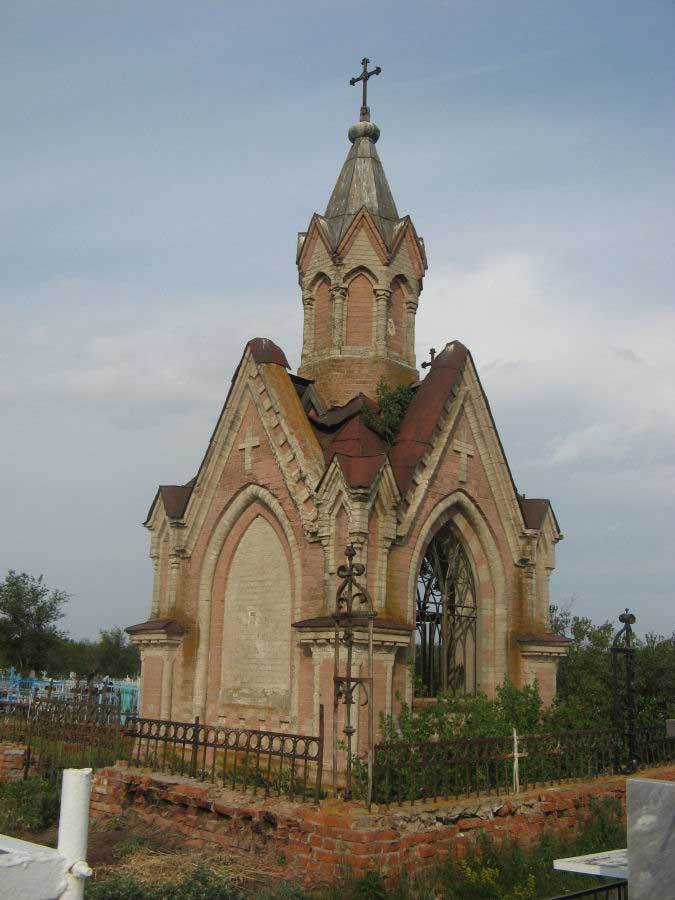
Chapel in the cemetery of Seelmann.
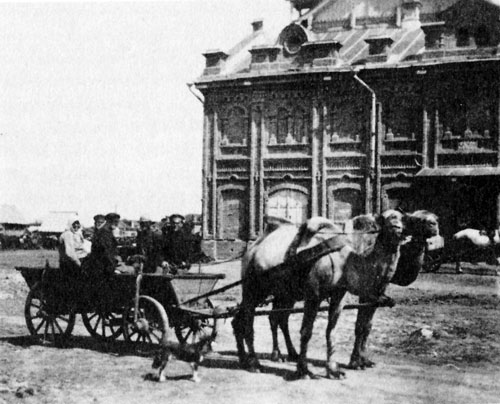
A camel drawn wagon in Seelmann.
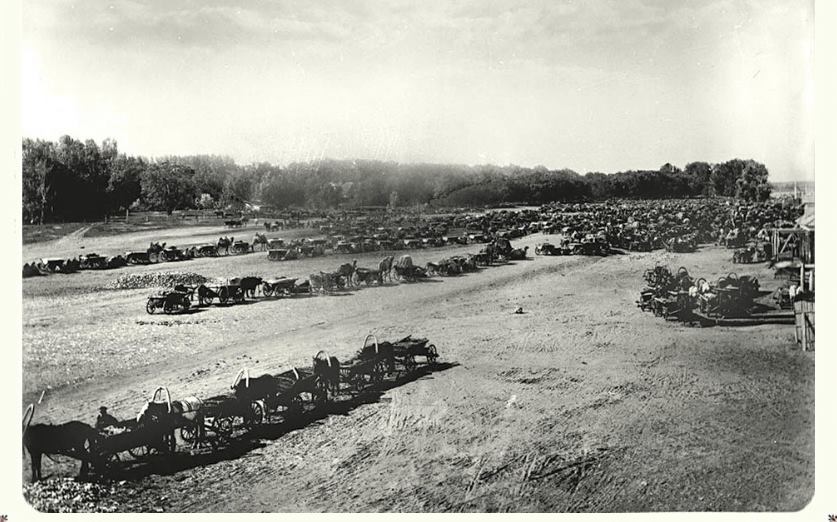
Grain "trains" near Seelmann (1894).
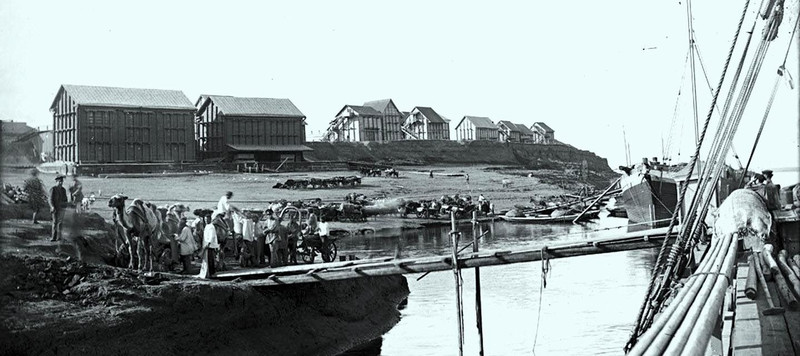
Port of Seelmann.
Source: Ein Reiseführer. Moskau: 1903.
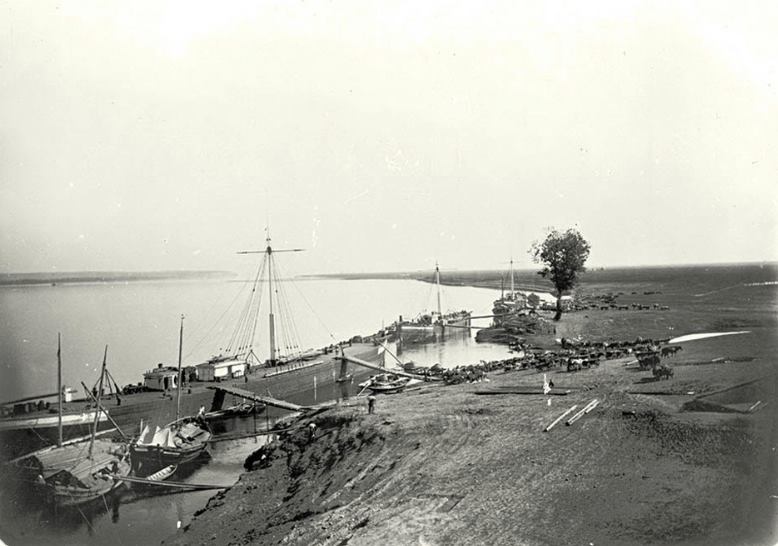
"Port" at Seelmann (1894).
Source: Alexander Kamlowski.
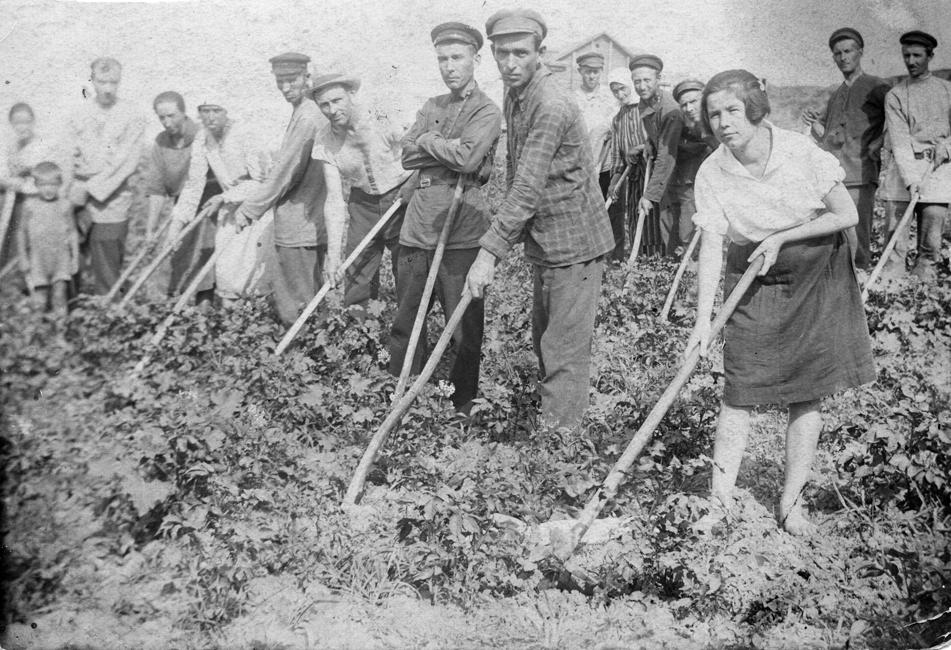
Hoeing potatoes in Seelmann (1932).
Source: Jorge Bohn.